What a magnificent place! Several friends had told us that Lucca is marvellous and well worth spending some time exploring, and it certainly has been.
Our B&B, La Boheme (Puccini was born in Lucca) has been very comfortable and conveniently situated in the old city. Breakfasts have been excellent, with cheese omelettes freshly made for us, as well as delicious pistachio tarts which Tom particularly liked.

Next door to our B&B a Carrefour Express supermarket produced filled rolls to order, so our lunch for tomorrow’s train journey is sorted. Chores done we set off in search of the Duomo, delighting in paved street after street of historic houses, cafes spilling out onto pavements with the help of gas heaters, and attractively dressed shop windows. In Piazza Napoleone the Christmas ice-skating rink was being used by one lonely skater, but then it is Monday today.


The duomo is breathtakingly beautiful. Built from the local white marble and adorned with exquisite stone carving and sculptures, it is quite different from the cathedrals we’ve seen so far, both outside and inside.

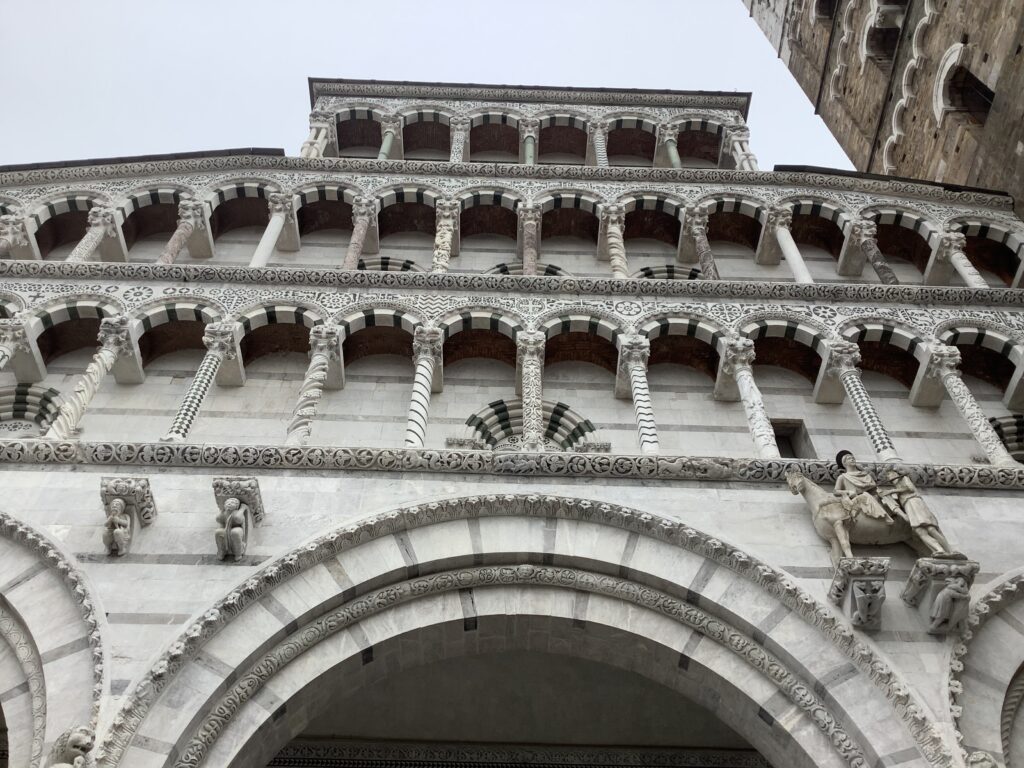


The original building was founded in the 6th century. Rebuilt in the 8th century, at around that time it became the cathedral for Lucca. Further rebuilding and extending took place under Bishop Anselmo da Baggio, who was later elected Pope Alexander II. The current building was consecrated in 1070, with later modifications being made in the 12th, 14th and 15th centuries. Essentially romanesque in style with early gothic additions, it seems to have escaped the modernising which took place elsewhere in the 17-18th centuries – and it is, we think, all the better for that.

The labyrinth, embedded in a column of the west portico, is thought to be 12th or 13th century and may even predate the famous labyrinth at Chartres, although its design is the same. The Latin inscription translates: ‘This is the labyrinth built by Dedalus of Crete: all who entered therein were lost, save Theseus, thanks to Ariadne’s thread.’
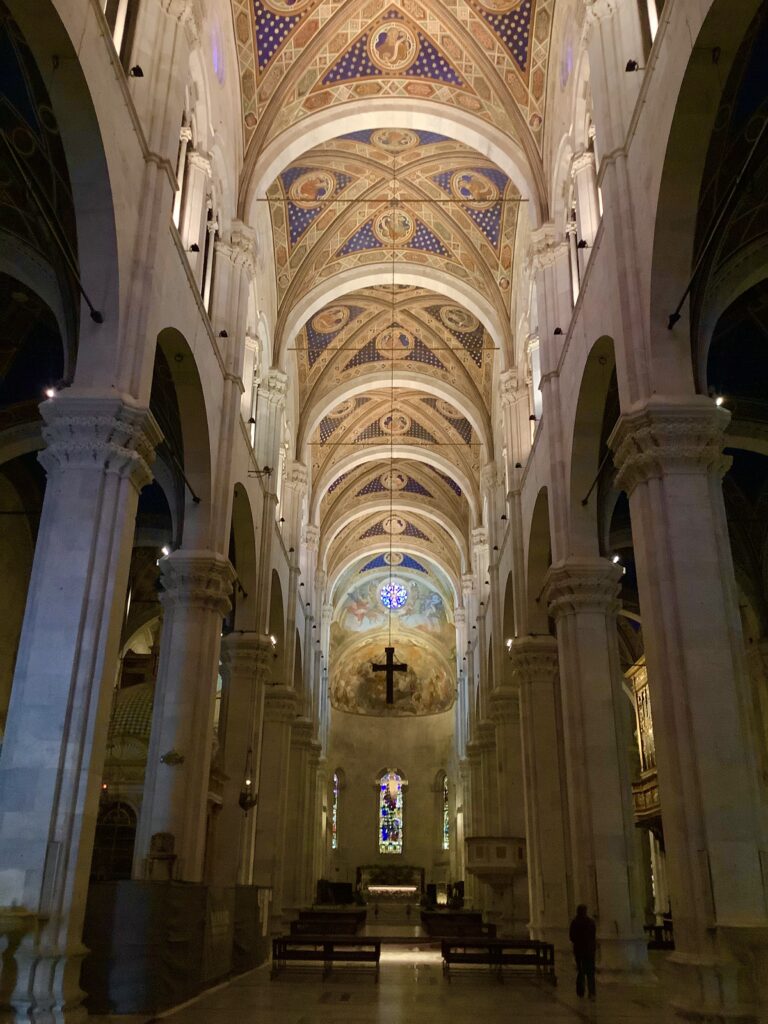


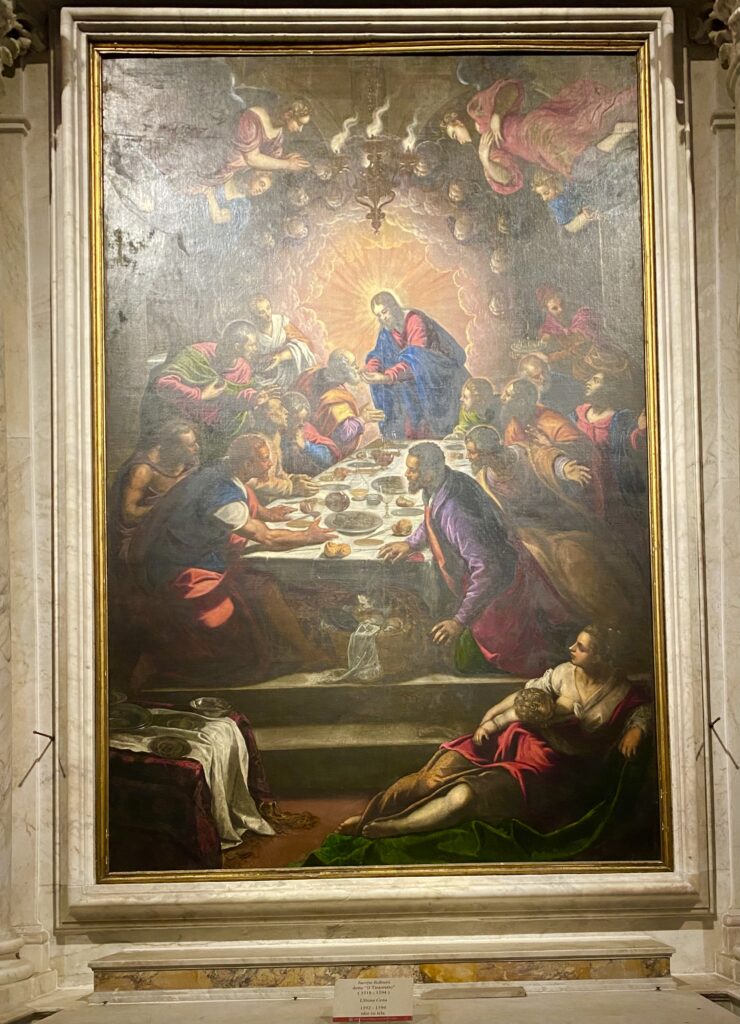


Not only does the cathedral contain many fine works of art, but there is also an adjacent museum housing other treasures removed from the cathedral at various times for preservation or to make way for new ideas. As pilgrims we were not required to pay to enter the cathedral (this is the first and only cathedral which has charged an entry fee so far) but we did have to pay a small fee to enter the museum, though it was more than worth it. At least the treasures were on display and not locked away out of sight.

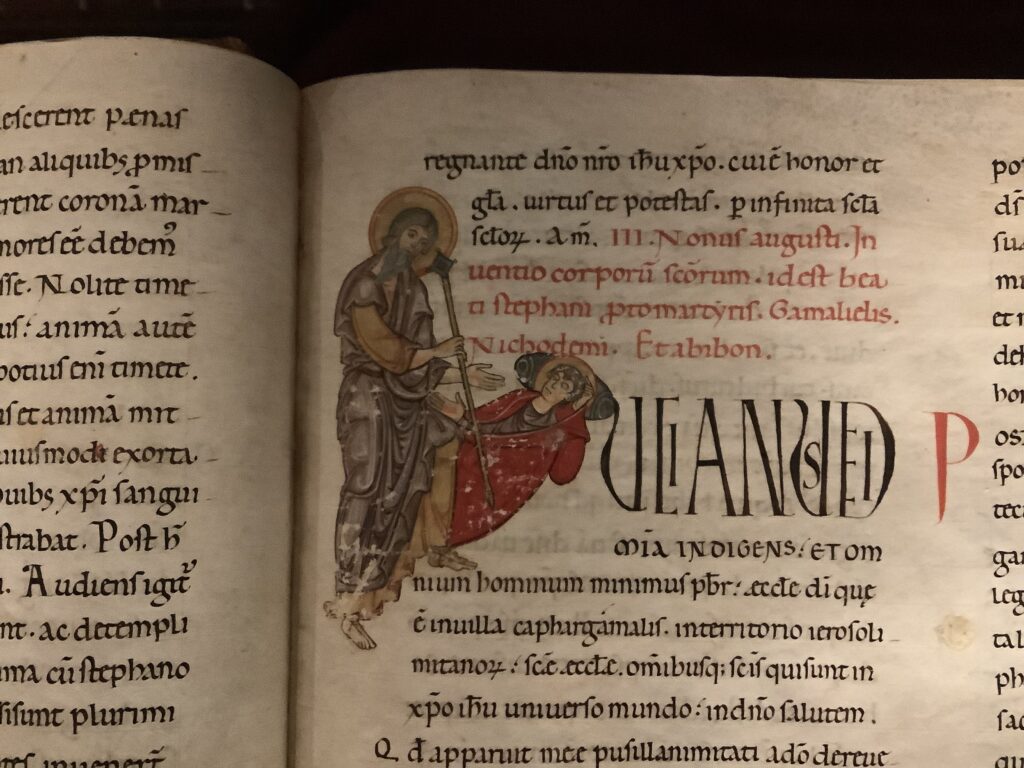
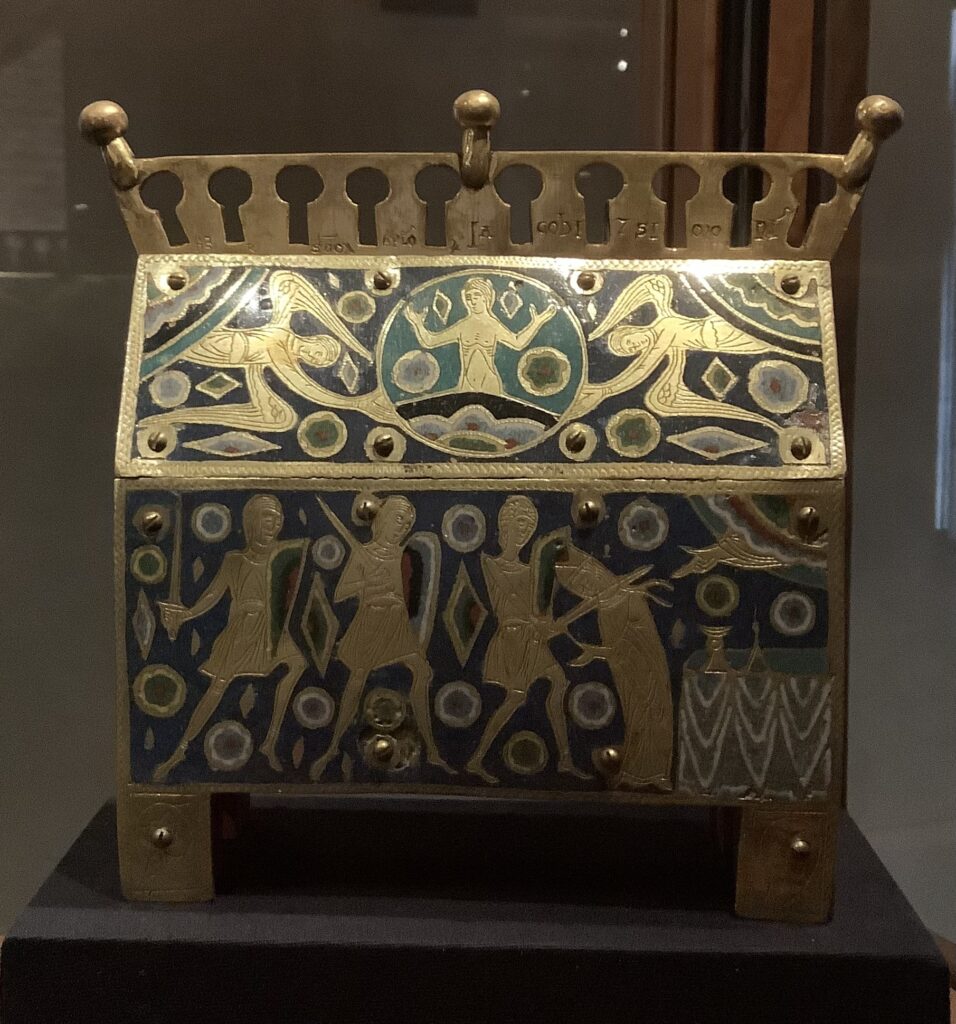

The museum also contained statues removed from the outside of the cathedral to halt their deterioration, and the ceremonial tapestries that used to be hung around the cathedral on special occasions.
This reminded us of a lecture we attended many years ago at Dartington Hall which explained that medieval ecclesiastical buildings were designed to be acoustically most effective or pleasing to the musical ear with their ceremonial tapestries in place, rather than with bare stonework as we tend to use these buildings today. Apparently experiments were carried out at San Marco in Venice which confirmed that the music of its time sounds better with its tapestries hung as intended. It was a fascinating lecture which demonstrated the difference in a building’s resonance, not only due to its shape but also according to how much reverberation is generated.
Sadly, our experience on this pilgrimage so far is that church music has declined in Italy just as it has in France, and is a mere shadow of what it used to be. There have been no resident choirs singing in any of the cathedrals we have visited or services we’ve attended in other churches. It is some irony that it is the English (Protestant!) cathedral schools which are keeping European church music alive by educating and training generations of choristers. As choral singers ourselves we have been keen to support the opportunities offered to talented young choristers at our home cathedral in Salisbury by supporting the Choral Foundation.
Having exhausted ourselves looking at the cathedral and its museum we went in search of the amphitheatre, where medieval houses have been built around the outline of the Roman structure, now turned into shops, restaurants and apartments. When we got there we realised we should have used the other part of our museum ticket to climb over 400 steps to the top of the campanile for the views over the city as this would have given us a better perspective…but we couldn’t be bothered on our rest day!

Instead we went to look at the wonderful Basilica di San Frediano with its eye-catching mosaic on the west gable. This depicts The Ascension of Christ the Saviour and was created in the 13-14th centuries. Inside the Basilica retains its simple romanesque style, and is completely different from the duomo save for having a soaring nave.

The original building was commissioned by Frediano, an Irish cleric who became Bishop of Lucca, in the first half of the 6th century and it was later rededicated to him. Here was yet another historical link extending across medieval Europe.
We rounded off our rest day with a good supper at an Osteria near the amphitheatre recommended by the helpful young woman at our B&B.
Tomorrow we set out for home, for a longer rest, before returning to complete the remaining few weeks walk into Rome next year, when we have rebuilt our Brexit credits and, we hope, spring is on its way again.


Magnificent photos. Thankyou your blog brings Italy home to s Wales. Catch up once home I hope.
Wow, well done. Really enjoying reading your adventures. I see you’re quite close to Pisa, will you be visiting there?
Christine